

MCP development
The Model Context Protocol is the USB-C of AI: a single open standard for connecting models to tools and data. We build MCP servers that expose your systems to Claude, agents and IDEs safely, and integrate MCP into the products you're shipping.
In short
MCP, at a glance
- One MCP server works with every compatible client instead of a custom integration each time.
- An open, vendor-neutral protocol with a fast-growing ecosystem of servers and clients.
- Scoped capabilities, auth and audit keep models inside the access you grant.
- Mix and match servers — your data, SaaS tools, the web — behind one interface.
Why MCP
MCP in production.
Before MCP, every AI integration was bespoke: a custom adapter per model, per tool, per app. MCP replaces that N×M mess with one protocol. Build an MCP server once and any compatible client — Claude, an agent, an IDE — can use it.
We design and build MCP servers that expose your APIs, databases and internal tools as well-described, secure capabilities, and wire MCP clients into your own agents and apps so they can reach the wider ecosystem.
Build once, use everywhere
One MCP server works with every compatible client instead of a custom integration each time.
Open standard
An open, vendor-neutral protocol with a fast-growing ecosystem of servers and clients.
Secure by design
Scoped capabilities, auth and audit keep models inside the access you grant.
Composable
Mix and match servers — your data, SaaS tools, the web — behind one interface.
Future-proof integrations
Decouple tools from models, so swapping or adding models doesn't mean rewiring.
Typed, described tools
Clear schemas and descriptions mean models call your tools correctly the first time.
How we engineer
with MCP.
How we work
Senior engineers, accountable to outcomes. Every change typed, reviewed and tested.
01Custom MCP servers
Expose your APIs, databases and internal tools to AI clients as clean, typed MCP capabilities.
- Tool & resource design
- Typed schemas
- stdio & HTTP transports
02MCP client integration
Wire your agents and applications into MCP so they can use any server in the ecosystem.
- Client SDK integration
- Server discovery
- Capability negotiation
03Security & access control
Add the auth, scoping and auditing that make exposing systems to AI safe.
- OAuth & API keys
- Scoped permissions
- Audit logging
04Tooling for agents
Package the tools your agents need as reusable MCP servers across products.
- Reusable tool libraries
- Versioned capabilities
- Sandboxed execution
05Legacy system bridging
Front older systems with an MCP server so modern AI can use them without a rewrite.
- Adapter design
- Rate limiting
- Schema mapping
06Support & maintenance
Keep MCP servers current with the spec, patched and monitored under an SLA.
- Spec upgrades
- Monitoring
- SLA-backed support
The stack we pair
with MCP.
SDKs
Transports
Clients
Security
A look at what we've shipped.


A real-time wealth platform built for scale
Re-architecting a legacy investment portal into a modular, real-time platform that holds up under heavy concurrent load.
View case studyA six-step cycle, repeated until it's right.
Transparent, predictable and collaborative. You always know what's shipping next and why.
Discovery
We map the business, users and constraints, then pressure-test the problem before a line of code.

Planning
Architecture, scope, and a sprint roadmap with clear milestones, budgets and success metrics.
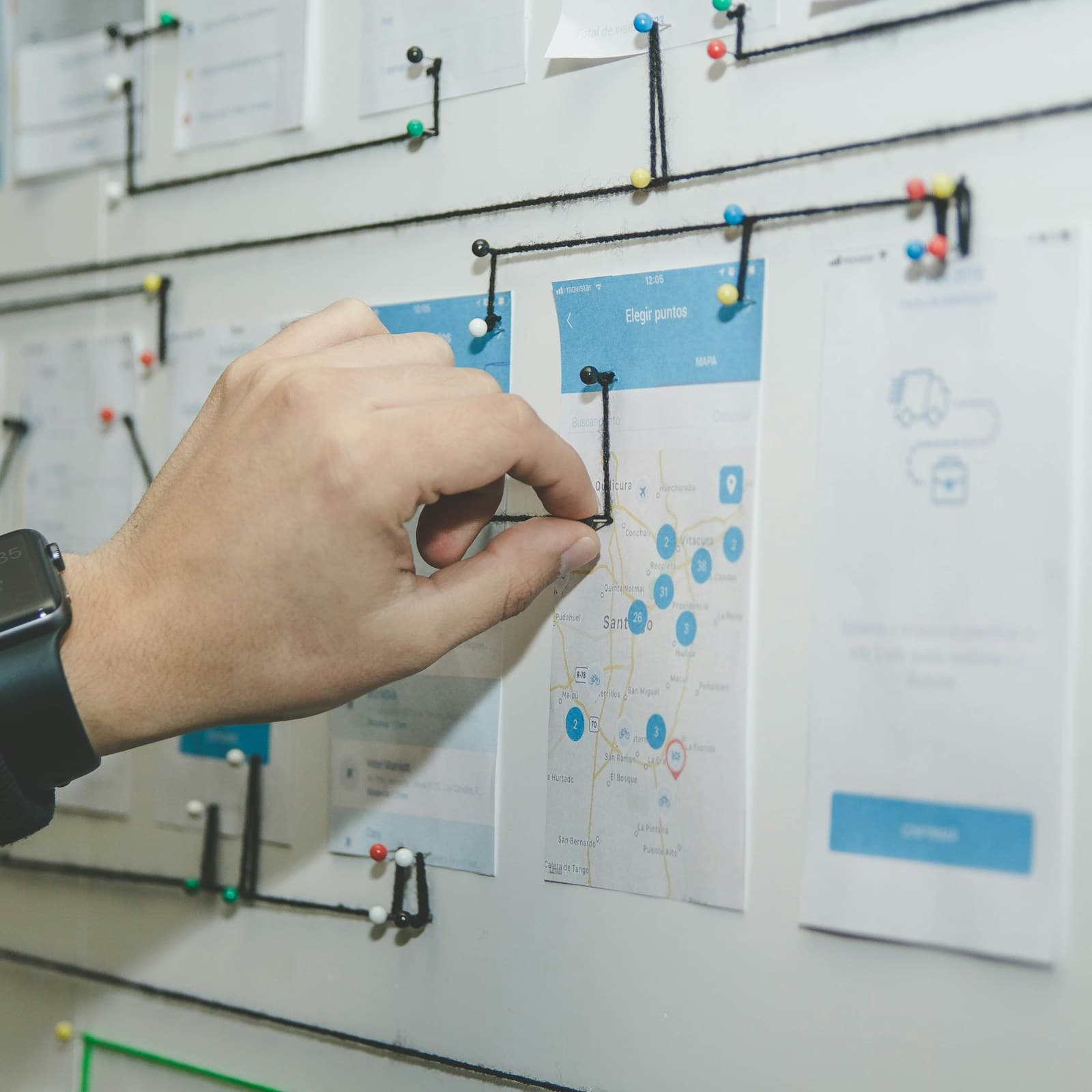
Design
Research-led UX and high-fidelity interfaces, validated with prototypes before build.

Development
Senior-led engineering in two-week sprints with demoable increments and continuous review.
Testing & QA
Automated and manual testing, security review and performance hardening before release.
Launch & Care
Confident deployment, monitoring and SLA-backed support that keeps things humming.
MCP questions, answered.
Still unsure if MCP is right for your project? A senior engineer will tell you straight on a free call.
The Model Context Protocol is an open standard for connecting AI models to tools and data. Instead of building a custom integration for every model–tool pair, you build one MCP server and any compatible AI client can use it. Think of it as a universal adapter for AI.
It lets AI assistants and agents safely use your data and tools without bespoke glue code per model. Build it once and it works with Claude, your own agents, AI-enabled IDEs and anything else that speaks MCP, with access you control.
Yes, when built properly. We scope each capability tightly, add authentication and authorisation, sandbox execution where needed, and log every call for audit. Models only ever reach what you explicitly grant.
Absolutely. An MCP server is typically a thin, well-described layer over your existing APIs and databases, mapping them to typed tools and resources, often with rate limiting and caching added in front.
Primarily TypeScript and Python using the official SDKs (and FastMCP for Python). We choose based on where your systems already live so the server is easy for your team to own.
Considering an alternative stack?

Let's build
Ready to build with MCP?
Book a free 30-minute consultation. We'll pressure-test your idea and map a MCP approach, whether or not we end up working together.
What to expect
What happens after you hit send.
You book in 60 seconds
Share a few details below. No lengthy forms, no sales gatekeeping.
A 30-minute strategy call
You talk to a senior engineer about your actual problem, not an account manager.
A clear path forward
You leave with concrete recommendations and a rough scope, whether or not we work together.
- 100% free
- Senior engineer
- NDA on request
- Reply in 1 business day
Prefer email?
hello@tech4ze.comNepal
House 6/12, Adarshtole, Katahari - 2, Morang, Koshi
Australia
13 Basnett Street, Kurralta Park, Adelaide, South Australia 5037